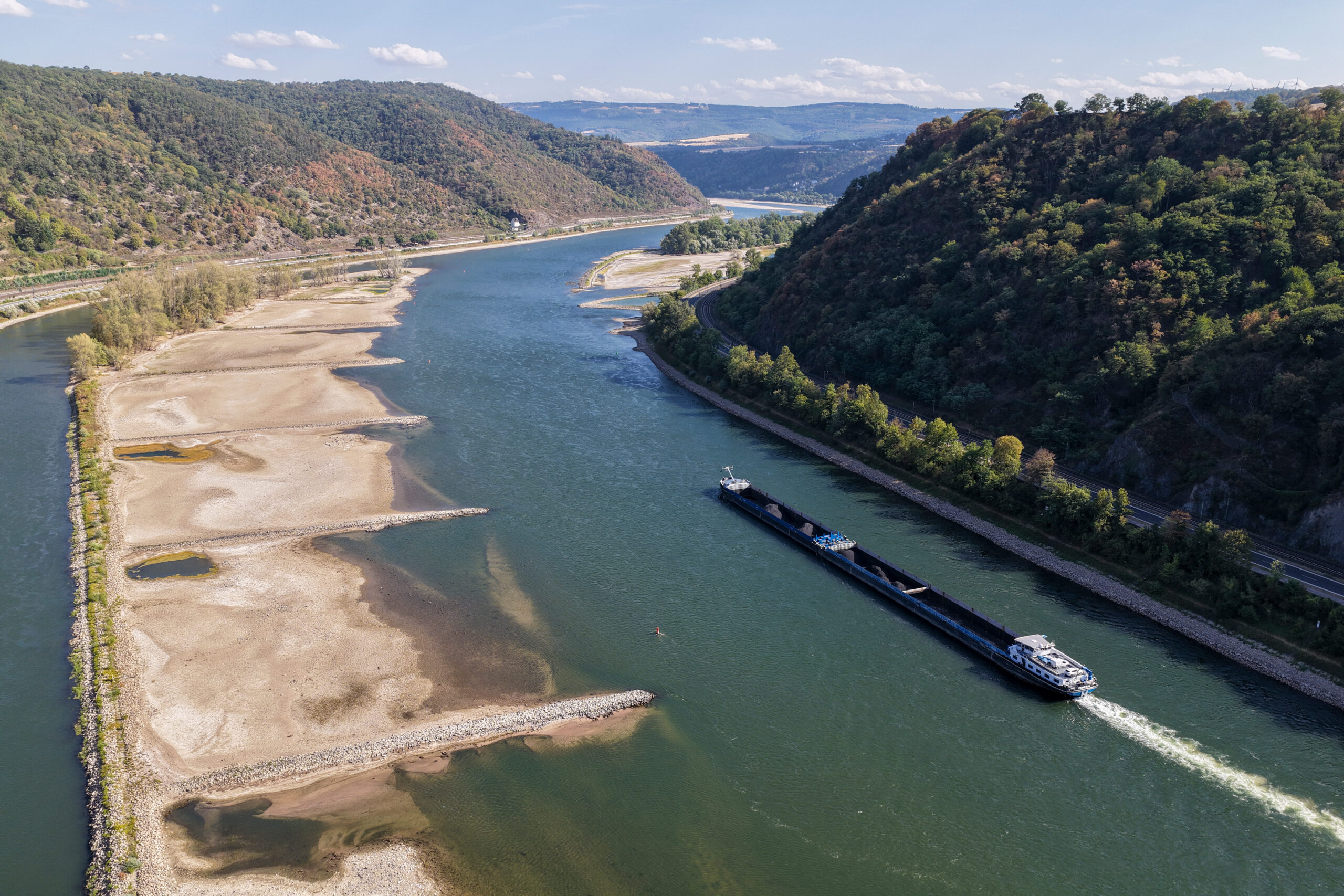
Record-low water levels on the Rhine River represent a significant logistics constraint for European industrial and materials producers dependent on barge transport. BASFY (BASF), a major chemical and materials manufacturer with heavy Rhine reliance, faces near-term headwinds from elevated alternative shipping costs and potential production scheduling disruptions. The waterway's capacity reduction forces modal shifting to rail and truck, adding 15–25% cost premiums to supply chains.
This drought-driven constraint disproportionately affects Basic Materials and Industrials sectors, particularly companies transporting bulk commodities, petrochemicals, and minerals. The absence of near-term precipitation relief suggests the bottleneck persists through winter months, compressing margins for logistics-intensive producers. European chemical and steel manufacturers face pressure on both input availability and shipping economics.
The Rhine disruption is a weather-driven, cyclical headwind rather than a structural market shock, limiting broad equity correlation. However, companies with high European cost-of-goods-sold exposure and limited modal flexibility will experience measurable margin compression. TKAMY (ThyssenKrupp) and similar integrated producers face temporary but material operational friction.
Sector implication: European-exposed Basic Materials and Industrials enter a period of logistics cost inflation and supply-chain friction. The impact is temporary but meaningful for Q4 guidance revisions and 2024 margin outlooks in chemical, steel, and commodity logistics segments.