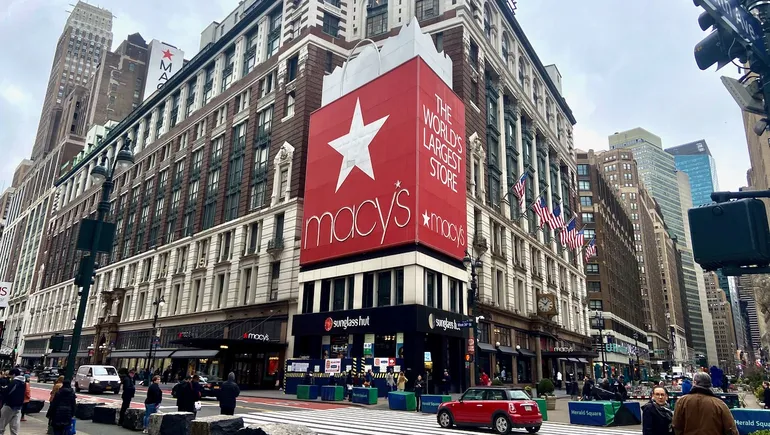
Macy's removal of its Herald Square billboard represents a symbolic capitulation by the department store chain, underscoring persistent structural headwinds in traditional retail. The iconic signage served as both marketing asset and cultural landmark; its dismantling signals continued contraction in physical retail footprint and declining investment in brand visibility during a period of strategic restructuring.
Reformation's IPO pricing at the low end of its range indicates tepid institutional demand for apparel retail exposure, despite the company's sustainability positioning and millennial-focused brand narrative. This muted market reception suggests investor skepticism toward apparel valuations and growth prospects in a competitive, consumer-discretionary environment.
Both developments reflect diminished confidence in traditional and contemporary retail models amid macroeconomic uncertainty, consumer spending normalization post-pandemic, and competitive pressures from e-commerce and direct-to-consumer channels. The contrast between a legacy department store exiting and a newer retailer entering at depressed valuation underscores sector-wide challenges in capturing consumer mindshare and achieving profitable growth.
Sector implication: Consumer Cyclical retail faces headwinds from discretionary spending pressure, elevated competition, and challenged valuations. These signals may portend broader weakness in apparel and specialty retail, though luxury and category-specific niches remain differentiated from department store and mass-market segments.