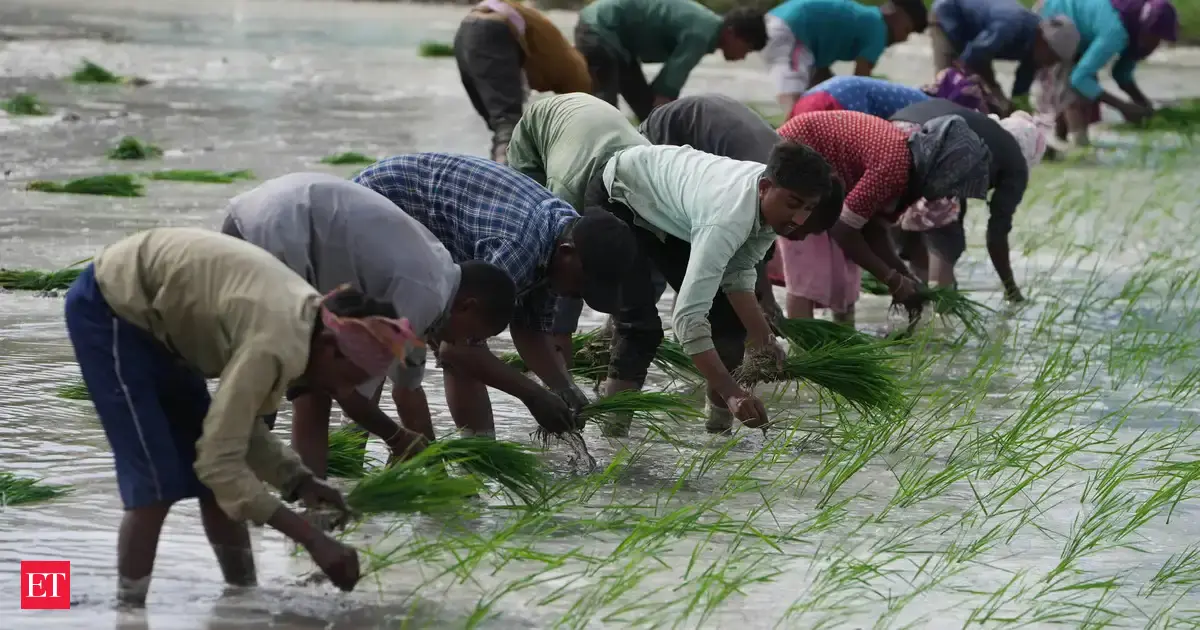
Uneven monsoon rainfall is creating headwinds for rural credit exposure across Indian banking institutions, particularly those with elevated agricultural and small-ticket loan concentrations. The pattern of patchy precipitation directly threatens crop yields and rural household income stability, creating downstream credit risk for lenders with significant rural portfolios like FRBA.
Early stress indicators are already visible in personal loan and micro-enterprise segments, suggesting demand-side weakness and rising default probability in vulnerable borrower cohorts. While bankers are adopting a cautious stance on new small-ticket loan issuance, this defensive posture may compress near-term revenue growth and compress net interest margins if risk appetite remains suppressed through the harvest cycle.
The strong winter harvest provides a temporary financial buffer for rural households, but inflation risks from uneven summer crop production could erode purchasing power and debt-servicing capacity. This weather-dependent vulnerability creates a lag effect where rural lending stress may amplify through Q2-Q3 earnings cycles if monsoon conditions don't normalize.
Sector implication: Financial Services faces cyclical headwinds in rural-exposed segments, with Consumer Cyclical sectors dependent on rural spending also at risk from income compression. Risk aversion among lenders may reduce credit availability precisely when rural economies need liquidity most.