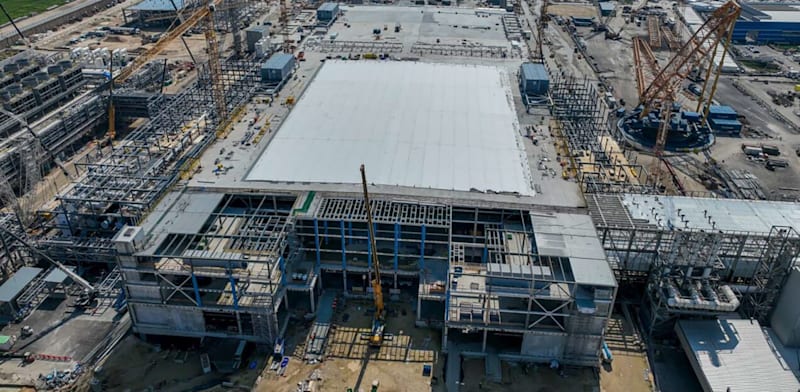
Intel faces a significant setback as Israel's Ministry of Finance has terminated a NIS 1.3 billion (approximately $350 million USD) subsidy for its fabrication facility in Kiryat Gat. This cancellation follows a two-year construction freeze, signaling deteriorating confidence in the chipmaker's expansion timeline and execution capability in the region.
The withdrawal of state support reflects widening skepticism around INTC's capital allocation strategy and ability to deliver on committed projects amid competitive and operational pressures. Government grant cancellations typically indicate reassessment of project viability and may foreshadow further delays or strategic repositioning of the facility.
For Intel, this represents both a direct financial loss and reputational damage among sovereign investors and partners who fund advanced semiconductor capacity. The Israeli subsidy was part of broader efforts to diversify chip production outside Asia—a strategic pillar now undermined by execution delays and geopolitical uncertainty.
Sector implication: The Technology sector faces renewed concerns about semiconductor capex efficiency and supply-chain resilience initiatives. This validates bearish sentiment around INTC's turnaround narrative and may accelerate investor rotation toward competitors with clearer near-term production roadmaps and lower execution risk.