Carney and Trump speed up trade negotiations a day after Trump puts a 50% tariff on Canadian goods
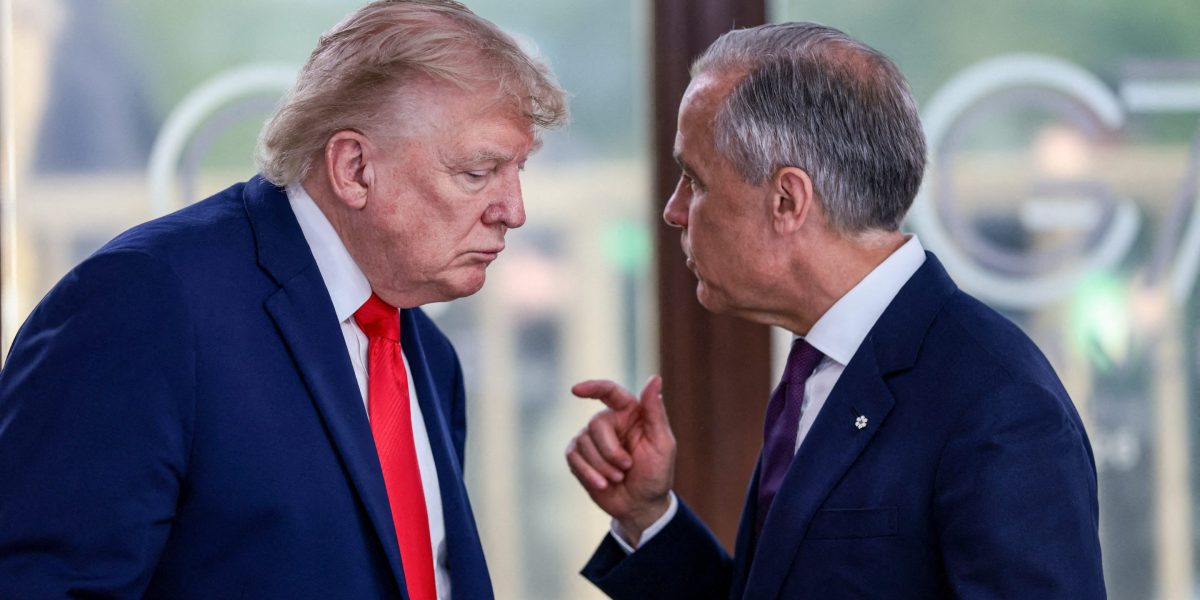
The acceleration of trade negotiations between Canadian officials and the Trump administration represents a critical geopolitical inflection point following the announcement of punitive 50% tariffs on Canadian goods. BMO, RY, and TD face material headwinds as cross-border trade friction threatens corporate earnings and economic growth on both sides of the border. The urgency to negotiate suggests recognition of tariff severity.
Tariff escalation creates compounding pressures across supply chains, manufacturing competitiveness, and consumer pricing. Canadian financial institutions with significant U.S. exposure and exporters in automotive, forest products, and agricultural sectors face margin compression. The 50% tariff magnitude signals protectionist intent rather than negotiating theater, elevating systemic risk in bilateral trade relationships.
Market reaction hinges on negotiation outcomes and timeline. If accelerated talks yield tariff rollback or exemptions, risk-off positioning in Canadian equities may reverse. Conversely, prolonged tariff implementation would deepen cross-border economic decoupling and justify sustained defensiveness in cyclical sectors dependent on USMCA framework stability.
Sector implication: Financial Services, Industrials, and Energy sectors face structural headwinds from trade policy uncertainty. The tariff-acceleration dynamic and negotiation-speed risk create asymmetric downside for leveraged Canadian exporters and multinational banks, while supporting defensive rotation toward utilities and consumer staples.