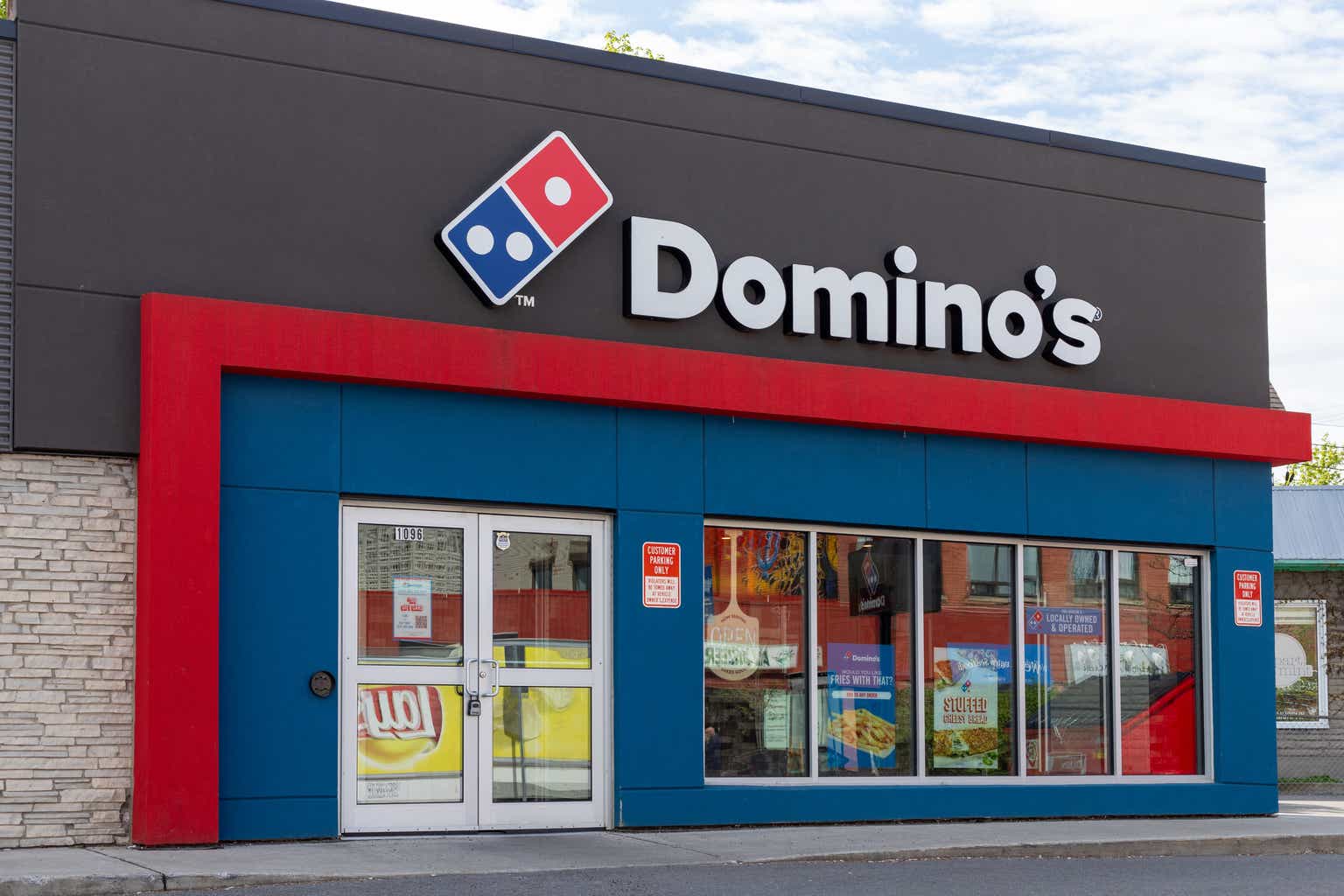
Domino's Pizza (DPZ) reported flat U.S. comparable sales in Q2, indicating a maturation plateau in the company's core domestic market. This sideways performance reflects broader consumer spending pressures in the quick-service restaurant sector, despite the company's resilient margin profile. The stabilization of profitability amid volume stagnation suggests operational efficiency is offsetting traffic headwinds.
The key tension emerges between corporate-level margin resilience and franchise pressure. Franchisees—who represent DPZ's largest revenue channel—face tighter unit economics and demand volatility, creating potential friction in the franchise relationship and threatening long-term expansion incentives. This dynamic warrants monitoring for future same-store sales trends and franchisee sentiment shifts.
The valuation adjustment reflected in lower EV/EBITDA multiple compression is warranted given the comp growth stall. The market is repricing DPZ from a growth narrative to a mature cash-flow story, which typically attracts dividend-focused capital but reduces multiple expansion potential. This rerating is sector-consistent with other mature QSR operators facing similar saturation cycles.
Sector implication: DPZ's flat comps and franchisee strain are symptomatic of broader Consumer Cyclical deceleration, particularly in discretionary restaurant traffic. The divergence between corporate margins and franchise health suggests a bifurcated recovery, with scale-driven corporates outperforming smaller operators—a structural trend favoring consolidation and portfolio rationalization across the sector.