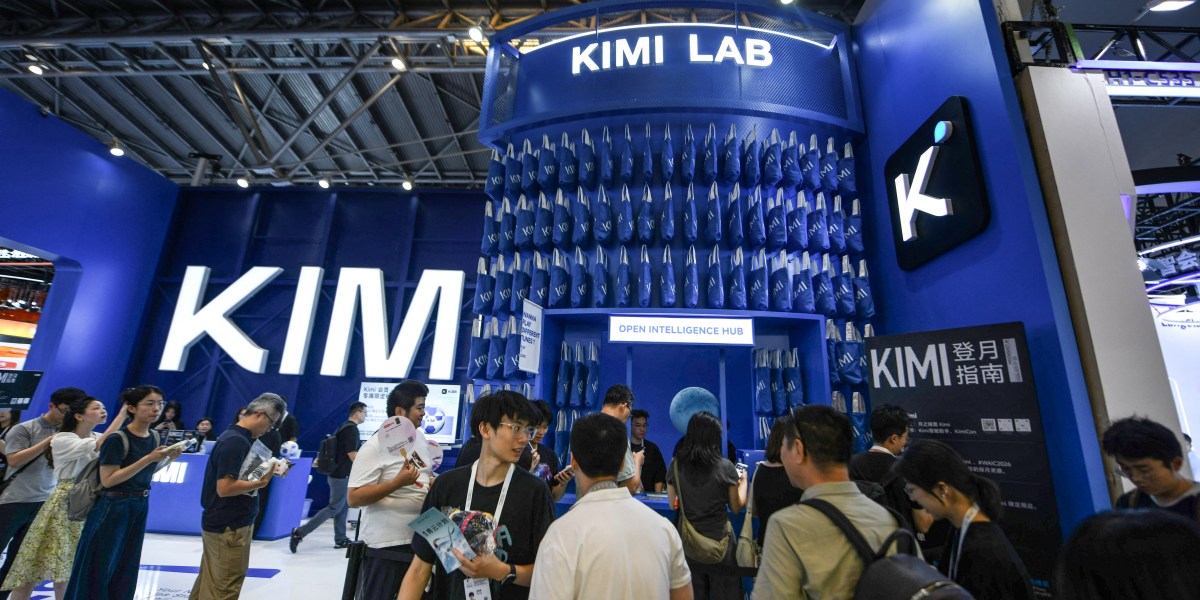
MoonShot AI's release of Kimi K3 represents a significant competitive escalation in generative AI development, challenging the prevailing narrative that U.S. technology leaders maintain structural advantages solely through superior capital expenditure on compute infrastructure. This announcement follows the earlier DeepSeek shock and signals accelerating capability convergence in large language model performance across geographic boundaries.
The competitive threat directly undermines the investment thesis supporting premium valuations for NVDA and other AI infrastructure beneficiaries, which have been predicated on sustained demand for cutting-edge semiconductors and computing clusters. If Chinese competitors can achieve comparable performance through alternative architectures or efficiency innovations, the moat protecting high-margin semiconductor suppliers narrows substantially, creating margin compression risk across the chip design and fabrication ecosystem.
Broader implications extend to TSLA and other firms dependent on proprietary AI capabilities for competitive differentiation in autonomous systems and data processing. The demonstration that innovation leadership is not exclusively purchased through spending creates valuation uncertainty for companies whose competitive positioning rests on technological moats built through hardware advantages.
Sector implication: Technology sector faces repricing of AI-infrastructure assumptions. The news triggers defensive rotation away from hardware-centric and capital-intensive AI plays toward software and service models with lower fixed-cost structures. Geopolitical bifurcation in AI development accelerates, increasing strategic uncertainty for multinational tech firms.