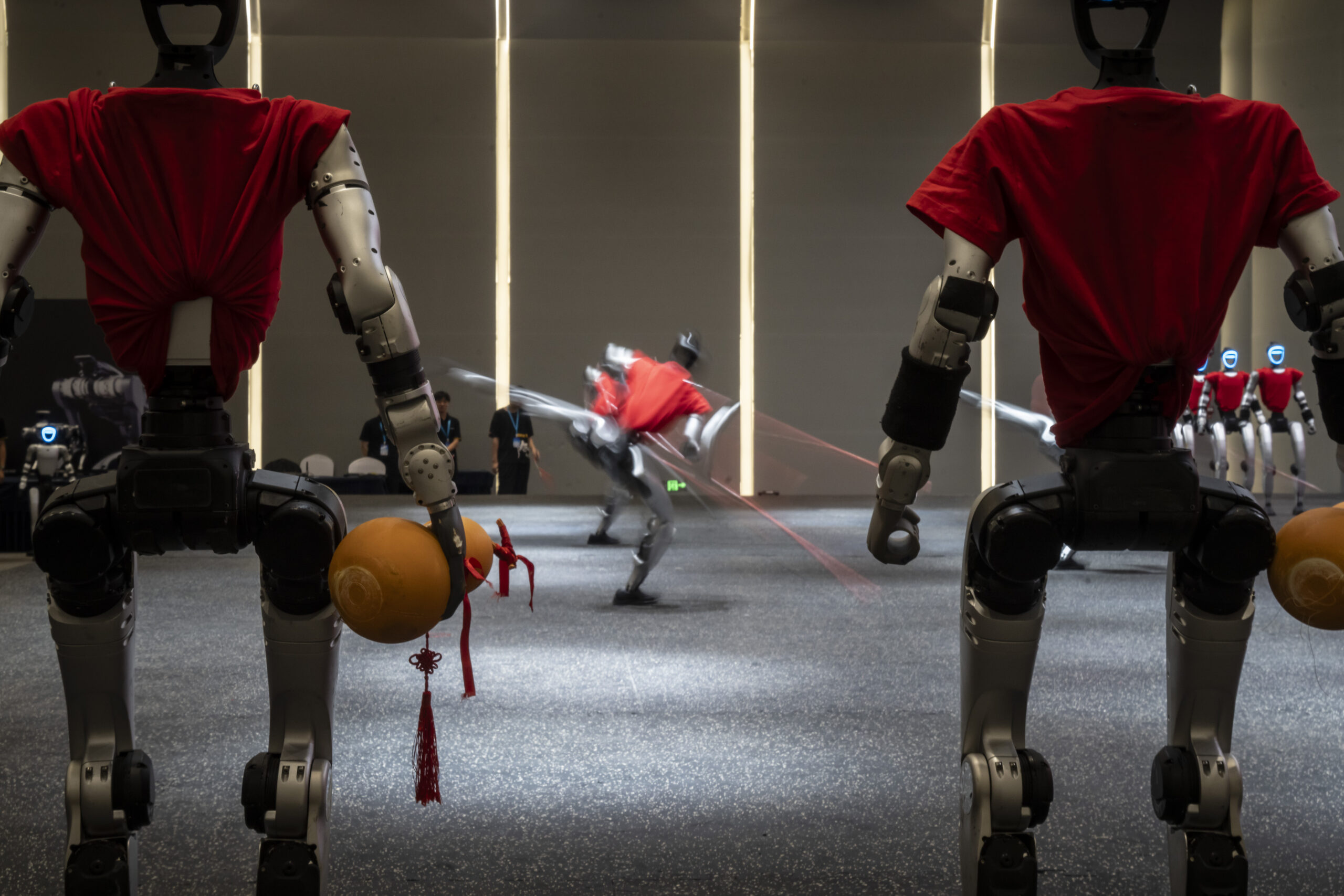
China is advancing humanoid robotics deployment in industrial and consumer-facing environments, signaling accelerating automation adoption in Asia-Pacific manufacturing. The initiative reflects long-term competitive positioning in robotics and artificial intelligence, sectors where both Western and Chinese firms compete for dominance in labor displacement and operational efficiency gains.
This development has mixed implications for technology and industrial automation players. Companies like Tesla and alphabet-affiliated robotics ventures face emerging Chinese competition, though the article focuses on proof-of-concept rather than commercialization at scale. The snack-stacking application suggests near-term focus on retail and logistics optimization rather than high-complexity manufacturing.
From a macroeconomic lens, accelerating automation in China could constrain domestic labor demand while simultaneously reducing cost structures for exported goods. This may pressure margins for automation-dependent Western manufacturers and increase competitive intensity in global supply chains over 24–36 months.
Sector implication: Technology and Industrials remain structurally bullish on automation secular trends, but geopolitical and trade friction risks are elevated. Monitor Chinese robotics IP development and tariff policy responses as key valuation drivers for exposed multinationals.