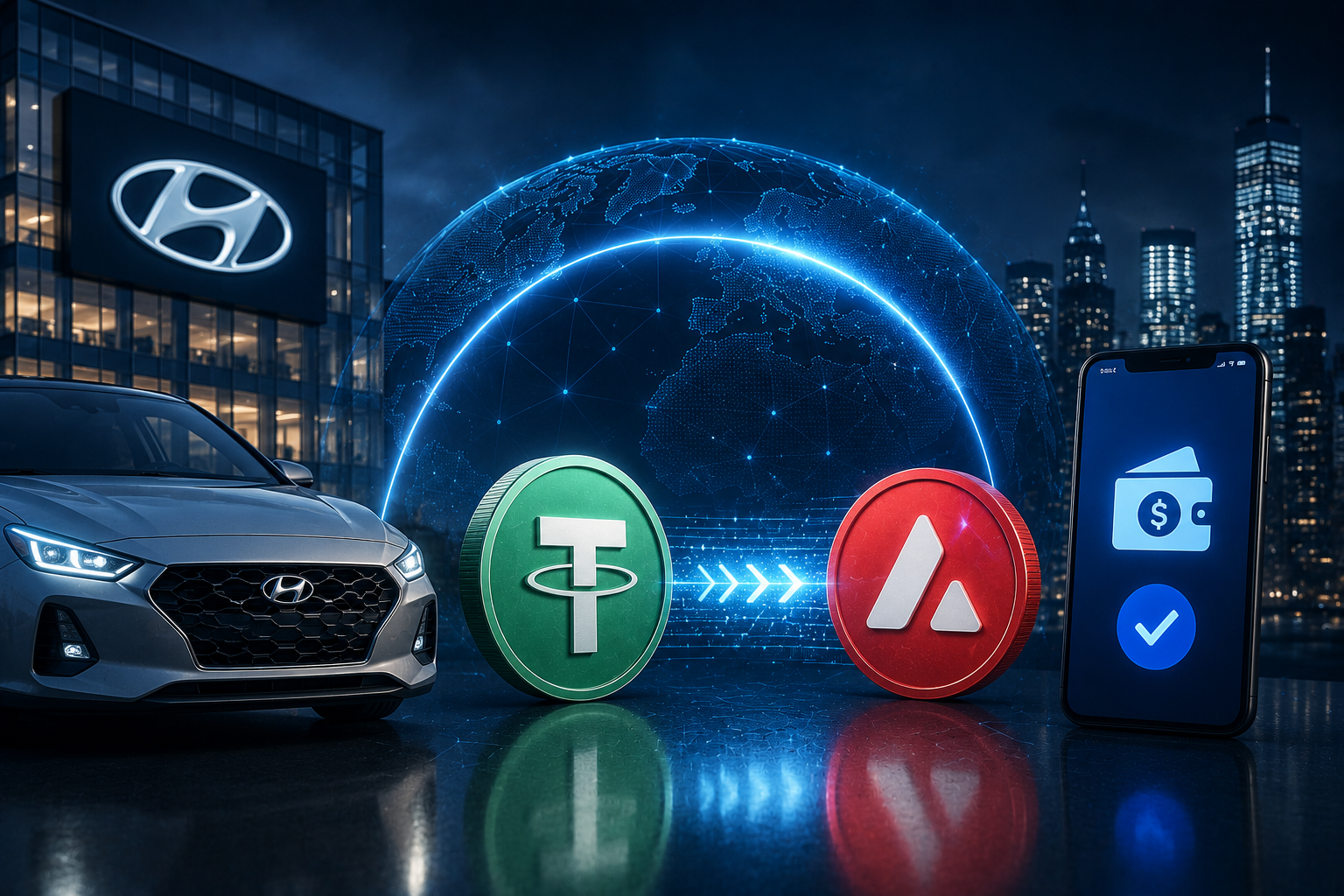
Hyundai Motor and Hyundai Card have executed their first production-grade cross-border remittance using Tether's USDT stablecoin on the Avalanche blockchain. This marks a meaningful expansion of blockchain-based settlement infrastructure beyond proof-of-concept pilots, demonstrating institutional adoption of decentralized payment rails for intra-corporate treasury operations.
The use of stablecoin rails for subsidiary fund transfers addresses persistent friction in traditional correspondent banking—slower settlement windows, higher intermediary fees, and FX exposure during transit. By leveraging Avalanche's throughput and Tether's liquidity depth, Hyundai optimizes working capital efficiency and reduces operational drag on cross-border payables, particularly relevant given the automaker's sprawling global manufacturing footprint.
This adoption signals competitive pressure among automotive conglomerates to modernize payment infrastructure and reduce settlement costs. While individual transaction impact is modest, scaled adoption across Hyundai's subsidiary network could accelerate industry migration from SWIFT-based rails to tokenized settlement, creating a template for other multinational manufacturers and tier-1 suppliers.
Sector implication: The news is moderately constructive for Industrial equities exploring operational efficiency gains through blockchain infrastructure, and for Financial Services custodians integrating stablecoin settlement. However, the impact remains structural and gradual—not an earnings inflection. The broader market correlation is muted given limited direct financial materiality to equity valuations in the near term.