Rs 20,000 SIP vs Rs 20,000 RD: Which monthly investment can generate higher returns in 5 years?
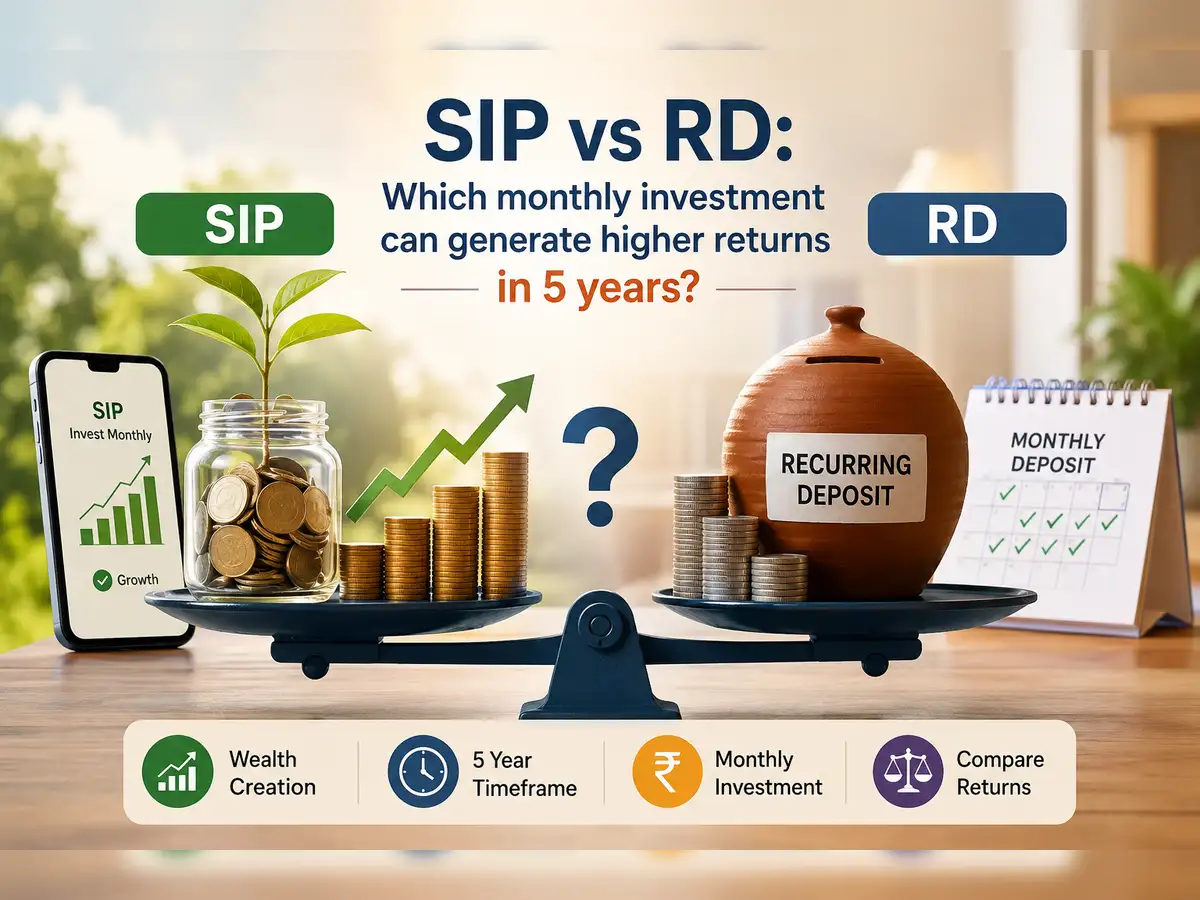
This article compares two retail investment vehicles available to Indian savers: systematic investment plans (SIPs) in mutual funds versus recurring deposits (RDs) through banking institutions. The comparison frames a fundamental trade-off between growth potential and capital preservation, with SIPs leveraging equity market exposure against RDs' fixed-income certainty.
SIPs theoretically offer higher return potential over a five-year horizon through exposure to market-linked securities, though they carry volatility and downside risk. Recurring deposits, exemplified by India Post offerings at 6.7% annual interest, deliver predictable maturity values—approximately Rs 14.27 lakh on Rs 20,000 monthly contributions—with zero market risk and implicit government backing for postal savings instruments.
The article's retail-focused positioning suggests this is educational content for individual investors rather than institutional market analysis. No publicly traded equities face direct catalysts from this comparison, and the discussion remains domestic India-centric without material implications for global capital flows or U.S. equity markets.
Sector implication: Minor visibility for Indian financial services providers offering both SIP platforms and deposit products, but no actionable signal for institutional trading or broad market correlation. The content addresses household asset allocation preferences rather than systemic financial conditions.