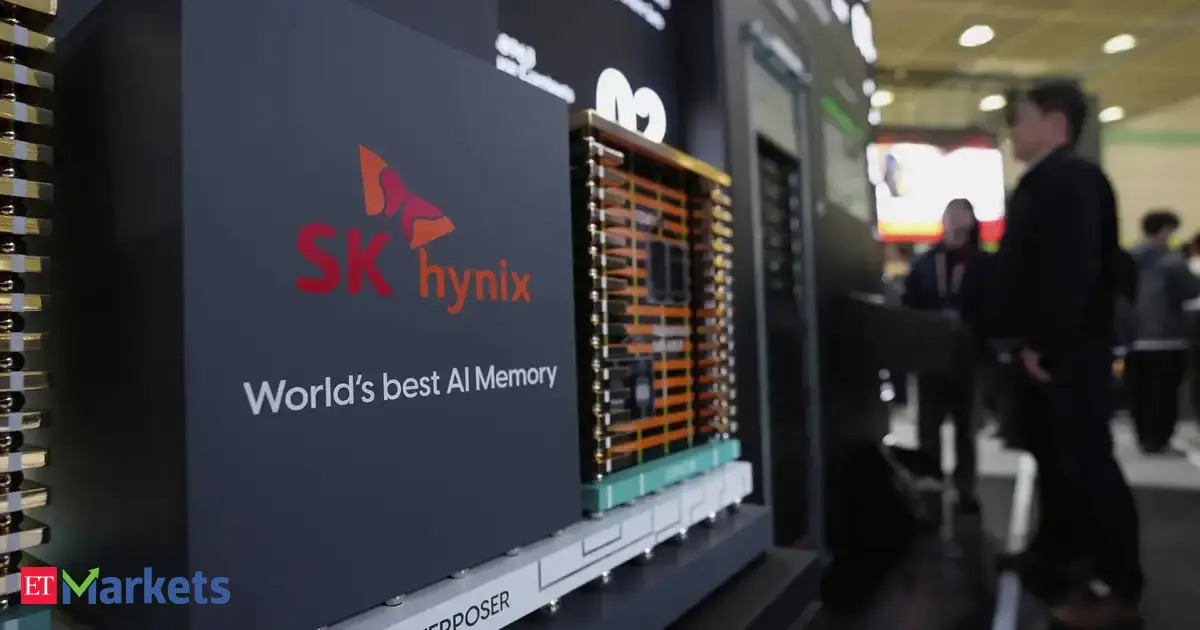
SK Hynix's planned $29 billion US listing represents a structural capital influx into semiconductor manufacturing, signaling institutional confidence in AI infrastructure durability. The pre-listing 5% decline is typical profit-taking ahead of mega-IPOs and does not undermine the company's fundamental momentum in memory chip demand tied to LLM and data center expansion.
This offering amplifies competitive dynamics in the AI chip supply chain. While NVIDIA dominates GPUs, SK Hynix controls critical high-bandwidth memory (HBM) and DRAM production—inputs essential to every major AI platform. A well-capitalized Hynix accelerates capacity scaling, potentially moderating pricing power concentration and improving margins for AI infrastructure customers rather than creating significant margin compression for peers.
The $29 billion capital raise underscores South Korea's strategic pivot toward semiconductor sovereignty and positions the nation as a co-pillar of AI hardware alongside Taiwan and the US. This geopolitical dimension reduces single-region supply-chain risk, a narrative favorable to long-cycle technology investors and institutional allocators rotating into secular growth.
Sector implication: Technology and semiconductors face near-term volatility from IPO supply, but the underlying thesis—AI-driven memory demand outpacing historical growth—remains intact. Broader semiconductor exposure and AI infrastructure plays benefit from increased liquidity and manufacturing capacity credibility in the sector.