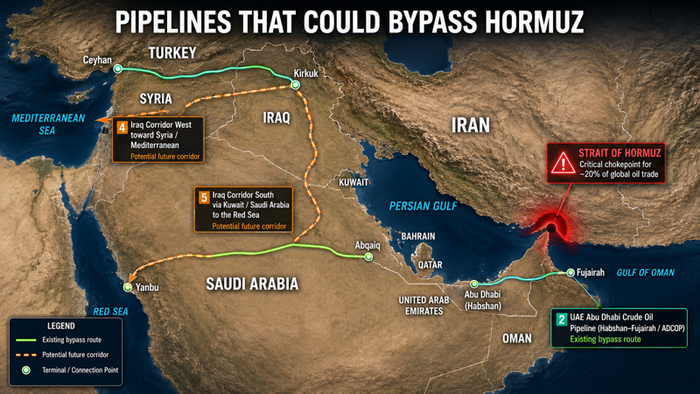
TotalEnergies CEO's public advocacy for infrastructure diversification in the Persian Gulf reflects broader geopolitical risk management within the energy sector. The call to rewire energy flows around the Strait of Hormuz signals executive-level concern about chokepoint vulnerability and supply-chain resilience in global oil distribution networks.
This positioning indicates the major integrated oil company is preparing strategic narratives around energy security and infrastructure investment. While such statements are often precursors to capital allocation announcements or policy advocacy, they also underscore endemic geopolitical tail-risk in traditional hydrocarbon supply chains that investors price into energy equities on a rolling basis.
The broader implication for energy majors is incremental: diversification messaging typically supports long-term capital intensity arguments and can justify domestic or allied-nation projects. However, it does not constitute an immediate operational or earnings catalyst for TTE, nor does it materially alter near-term commodity price expectations.
Sector implication: Energy infrastructure rhetoric from C-suite executives is a neutral-to-constructive input for equities with large project backlogs, but remains secondary to crude and natural gas pricing dynamics. The announcement lacks market-moving specificity on timing, investment magnitude, or geopolitical escalation.