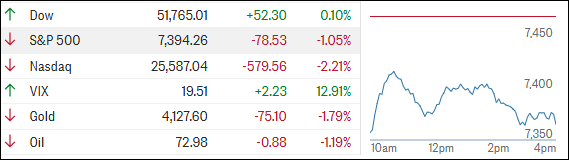
A coordinated tech sector selloff originating in Asian memory chip markets has cascaded into US equities, with weakness in semiconductor valuations triggering broad-based portfolio rebalancing. The transmission mechanism reflects structural dependencies: memory chip pricing pressure signals demand destruction and inventory adjustment across the global supply chain, amplifying sensitivity among semiconductor-exposed names like NVDA and AMD.
The Nasdaq's 1.3% decline on Monday, led by Alphabet's underperformance, indicates that mega-cap technology stocks are absorbing disproportionate selling despite fundamentals remaining relatively intact. This pattern suggests margin compression concerns and multiple contraction risk dominating price action, rather than earnings revisions or macro deterioration.
Asia's overnight weakness establishing the tone for US open reflects real-time market microstructure: offshore semiconductor weakness creates price discovery that US traders price in at the bell, creating momentum selling into equity index funds and tech-weighted portfolios. The overnight cascade amplifies volatility and traps late-session Asia buyers.
Sector implication: Technology faces near-term headwinds from inventory normalization, though the breadth of selling (from memory chips to mega-cap software) suggests rotation risk rather than fundamental deterioration. Exposure concentration among passive tech-heavy products creates amplified downside mechanics; watch for stabilization signals in Asian semiconductor futures to confirm floor-forming.