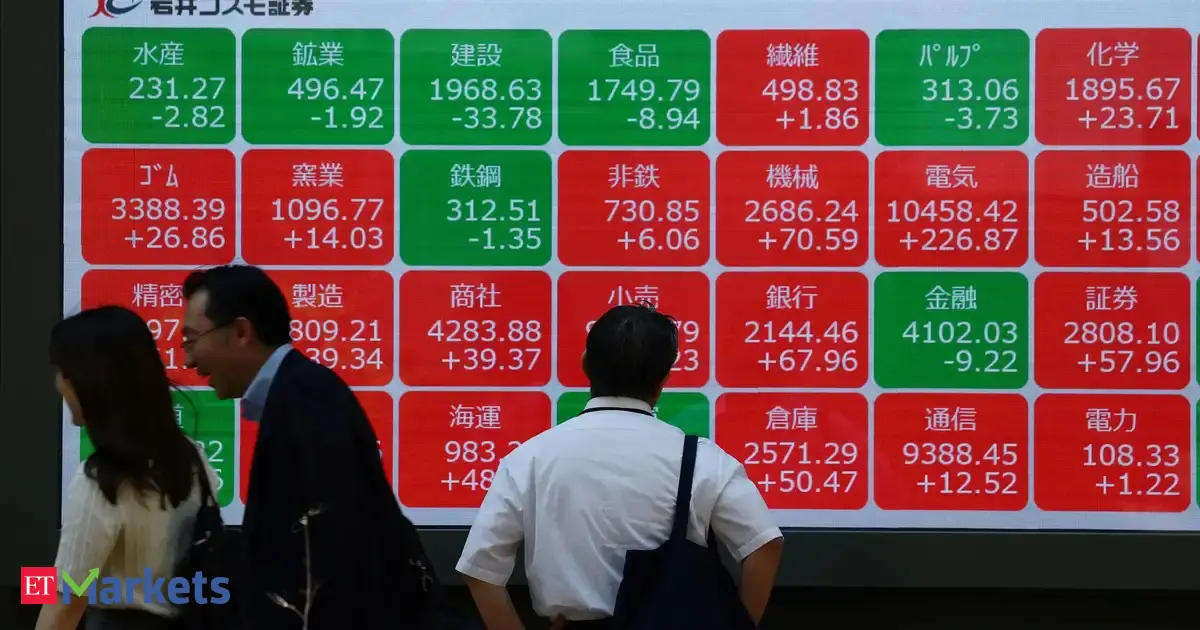
Japan's Nikkei 225 reached a historic milestone of 71,293.64 intraday, driven by a confluence of positive macro catalysts. The U.S.-Iran ceasefire agreement significantly reduced geopolitical risk premiums that have pressured risk assets, triggering broad-based relief buying across equity markets globally. This de-escalation removes a tail risk that has weighted on sentiment since tensions escalated earlier this year.
The semiconductor and financial services sectors emerged as primary beneficiaries, reflecting two distinct market dynamics. Chipmakers gained on expectations that reduced geopolitical uncertainty will support capital expenditure cycles and supply chain normalization. Financial stocks appreciated due to improved macro stability and lower geopolitical risk-off hedging demand, which typically suppresses financial sector valuations and credit spreads.
Conversely, marine transportation equities declined, suggesting market participants are rotating away from defensive plays and shipping volatility hedges now that global logistics security concerns have diminished. This rotation from safe-haven transportation exposure toward cyclical growth names indicates increased risk appetite and expectations for normalized trade flows.
Sector implication: The Nikkei rally signals a classic risk-on environment where geopolitical resolution catalyzes cyclical outperformance. Japanese equity strength, paired with the Fed's measured stance, supports continued equity valuation expansion in technology and financials while pressuring defensive transportation plays.