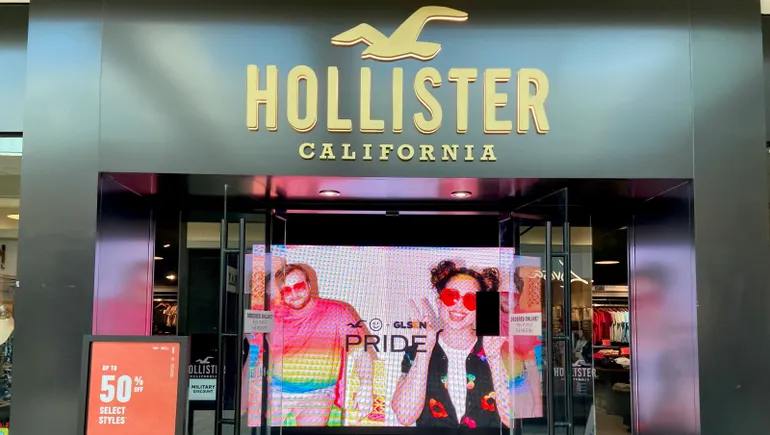
Abercrombie & Fitch (ANF) is expanding its wholesale distribution strategy by bringing the Hollister brand to Target stores across the US. This represents a continuation of the company's omnichannel strategy to increase brand penetration through third-party retail partners, following similar placements with Dick's Sporting Goods and department stores in the prior year.
The wholesale expansion signals management confidence in the Hollister brand's market appeal and represents a revenue diversification mechanism that reduces reliance on direct-to-consumer channels. By leveraging Target's massive store footprint and traffic, ANF gains access to a broader demographic without incremental capital expenditure on company-owned locations. This model also mitigates foot traffic volatility in physical retail.
The move is inherently margin accretive in the wholesale channel, though at lower unit economics than DTC sales. However, volume gains and brand visibility justify the trade-off in a competitive apparel market where distribution breadth increasingly matters. The timing aligns with stabilization in consumer discretionary spending and strengthened operational execution at ANF.
Sector implication: This development underscores the retail sector's shift toward hybrid distribution models as a defensive and growth mechanism. For Consumer Cyclical equities broadly, wholesale partnerships reduce exposure to individual retailer performance while maintaining brand relevance—a critical metric for apparel companies facing sustained margin pressure and category commoditization.