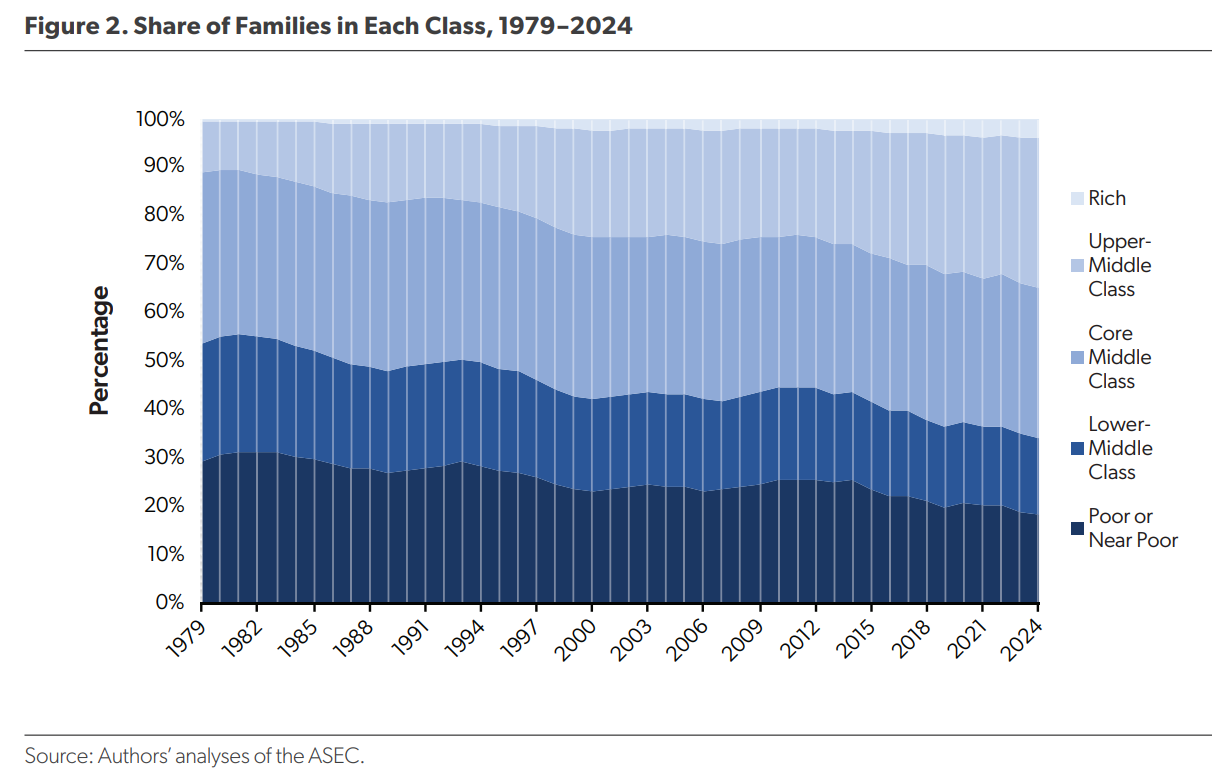
The emergence of $1 trillion ETFs like VOO signals a structural shift in how capital pools and concentrates across institutional and retail channels. This reflects democratization of index investing alongside paradoxical wealth concentration dynamics, where passive flows into mega-cap vehicles accelerate regardless of underlying economic dispersion.
The simultaneous rise of trillion-dollar passive vehicles and widening wealth inequality presents a dual narrative: retail accessibility to diversified equity exposure has expanded dramatically, yet capital concentration in large-cap indices means returns accrue disproportionately to those already holding significant equity stakes. This creates a self-reinforcing cycle where passive flows reinforce mega-cap dominance.
Middle-class wealth erosion stems partly from underexposure to equity markets and asset inflation outpacing wage growth, while institutional capital consolidates in liquid, passive products. The Financial Services sector benefits from AUM growth and fee compression, though structural headwinds persist for regional asset managers competing against behemoth passive providers.
Sector implication: Technology and mega-cap exposure will likely remain bid as long as passive flows dominate. This neutral-to-slightly-bearish signal for financial intermediaries suggests margin pressure, while the broader equity market correlation remains moderate—driven by macro factors beyond ETF structure.